On March 27, the government announced that operational restrictions on coal-fired power generation would be lifted in order to conserve Liquefied Natural Gas (LNG), citing the impact on LNG imports caused by the blockade of the Strait of Hormuz. (Refer to the government document here, written in Japanese).
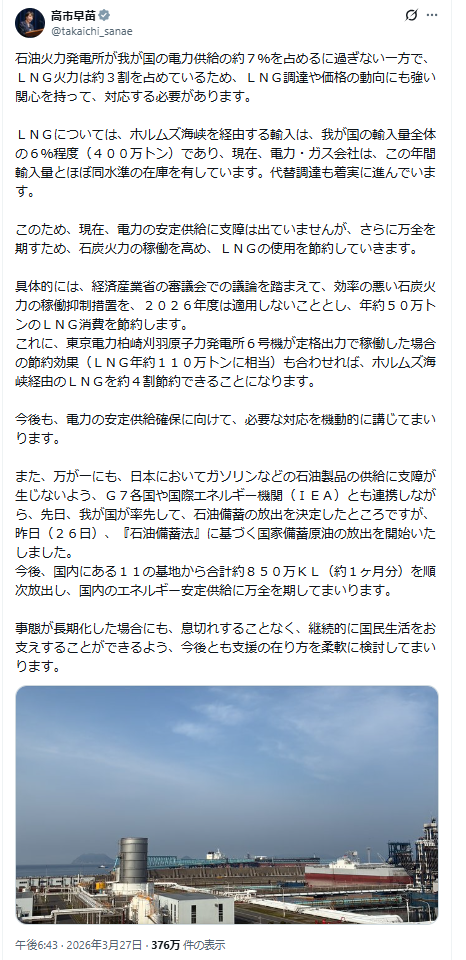
Translation of Prime Minister Takaichi’s X Post
While oil-fired power generation accounts for only about 7% of Japan’s power supply, LNG-fired power generation accounts for about 30%, which is why it is necessary to pay close attention and respond to trends in LNG procurement and pricing. Imports via the Strait of Hormuz account for about 6% (4 Mt) of Japan’s total LNG import volume, and electric power and gas companies currently have inventories roughly equivalent to this annual import volume. Alternative procurement is also progressing steadily. Therefore, there are currently no disruptions to the stable supply of electricity, however, to ensure even greater certainty, we will increase the operation of coal-fired power and reduce the use of LNG. Specifically, based on discussions by the councils of the Ministry of Economy, Trade and Industry (METI), the government decided to not apply operational restrictions for inefficient coal-fired power plants for FY2026, which can reduce annual LNG consumption by approximately 500,000 tons. If Tokyo Electric Power Company’s Kashiwazaki-Kariwa Nuclear Power Station Unit 6 operates at rated output (equivalent to approximately 1.1 Mt of LNG consumption per year), the additional savings effect will allow for a 40% reduction in the LNG imported through the Strait of Hormuz. We will continue to flexibly take necessary measures to maintain a stable supply of electric power. Furthermore, in order to prevent any disruption to the supply of petroleum products such as gasoline domestically, Japan recently took initiative in deciding to release its oil reserves in cooperation with the G7 countries and the International Energy Agency (IEA), and yesterday (March 26th), we began the release of national crude oil reserves based on the Oil Stockpiling Act. From now on, we will release a total of approximately 8.5 million KL (approximately one month’s supply) from 11 domestic bases to ensure a stable domestic energy supply. Even if the situation becomes prolonged, we will continue to flexibly consider our support measures so that we can continuously provide assistance to the public without running out of steam.
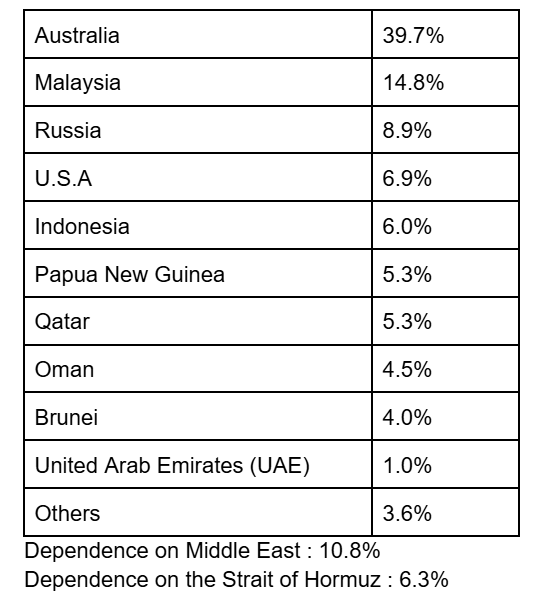
The annual import volume of LNG via the Strait of Hormuz is said to be approximately 4 Mt, accounting for 6.3% of total natural gas imports (64.98 Mt in FY2025). The LNG savings effect from lifting restrictions on coal-fired power plants is estimated to be approximately 500,000 tons, which corresponds to 13% of the LNG import volume via the Strait of Hormuz.
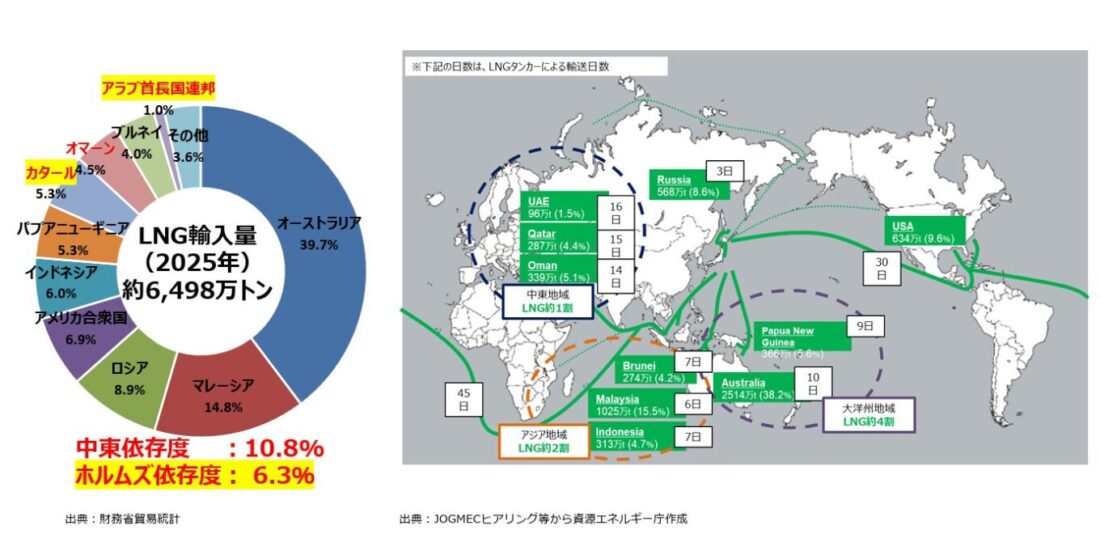
This figure is only available in Japanese. (LNGをめぐる動向と電力・ガスの安定供給について)
However, among all thermal power generation methods, coal-fired power has the highest CO2 emissions, and lifting operational restrictions goes against decarbonization efforts.
This article looks at the details of lifting of operational restriction on coal-fired power and its impact on decarbonization.
What are “operational restrictions on coal-fired power”? Lifting will add 1.7 Mt of CO2
The “operational restrictions on coal-fired power” refer to measures in the capacity market. The capacity market is a system that secures power supply for four years from now through auctions.
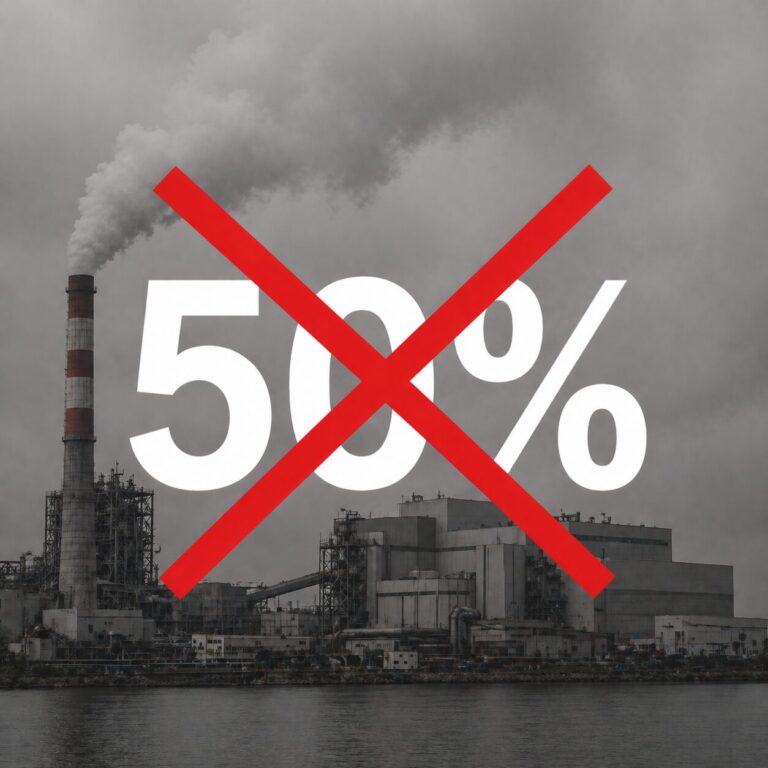
In order to limit the operation of coal-fired power plants, the capacity market has a measure to require inefficient coal-fired power plants (42% design efficiency) to maintain their capacity utilization rate below 50%, as otherwise the “capacity guarantee contract money” paid to the power plant through the market will be reduced by 20%. The plan is to lift this measure on a limited basis for this fiscal year.
So, how much extra CO2 will this policy generate?
The annual consumption of LNG in FY2024 was 36.85 Mt, and the total amount of electricity generated was 319,400 GWh. Since 500,000 tons of LNG can be saved this time, in terms of generated electricity, approximately 4,300 GWh will shift from LNG to coal. If calculated this emission amount using the CO2 emission factor per unit, approximately 1.7 Mt of additional CO2 will be emitted per year, which highlights how the policy goes against decarbonization.
Japan’s attempt to return to coal
On the other hand, it is also necessary to rethink whether the operational restrictions in the capacity market were insufficient in the first place. While the total amount of electricity generated by coal-fired power in FY2024 was 278,500 GWh, it appears that only about 4,300 GWh was reduced through operational restrictions. Current restriction measures for coal-fired power plants are only able to reduce a small part of the total generation, which is extremely inadequate at a time when coal-fired power must be reduced.
While an additional 1.7 Mt of CO2 emissions will have a very significant impact, when considering the total amount of coal-fired power generation, the scale of this policy change is relatively not that significant. It is questionable whether the change is notable enough to justify an announcement from the Prime Minister and extensive coverage by various media outlets.
Considering the context, it seems that this series of communications also has the intention of conveying the message that “coal-fired power is necessary for a stable electric power supply.” This year, the power industry has increasingly advocated for the necessity of coal-fired power, and it is necessary to closely monitor whether the movement to return to coal will continue to take advantage of the worsening situation in the Middle East, and whether the lifting of operational restrictions on capacity market will be extended beyond this fiscal year.
As the world is shifting to renewables and EVs, Japan should use this as an opportunity to transition away from fossil fuels
The blockade of the Strait of Hormuz has once again highlighted the vulnerability of a society dependent on fossil fuels. Even at this stage, councils in Japan are still calling for a return to coal and diversification of fossil fuel suppliers, presenting no policy for moving away from fossil fuels. However, many international organizations and research institutions are advocating for a transition away from fossil fuels from a security standpoint, and many countries are actually using this as an opportunity to advance the expansion of energy efficiency, renewable energy and EVs.
Examples of recent reports:
- At current LNG prices, the cost of LNG-fired power generation is 3 to 4 times the global average for solar and wind power, which makes LNG uncompetitive with solar and electricity storage in many Asian markets. The introduction of 1 GW of solar power could avoid $3 billion in LNG import costs over 25 years. (IEEFA, March 12, 2026)
- Coal prices have risen by approximately 15%, and a return to fossil fuels could pose further economic and environmental risks. The introduction of renewable energy has potential to support decarbonization, but this progress could stagnate or even reverse if we switch back to coal to meet energy demand. (Ember, March 23, 2026)
- Reports claiming that “Asia is returning to coal” due to the energy crisis are spreading, but this is highly likely to be offset in the long term by a transition to cheaper solar power. (Carbon Brief, April 8, 2026)
- In the first month since the beginning of the Hormuz Strait blockade, global thermal power generation decreased, and the decline in LNG-fired power was offset not by coal, but by a significant increase in solar and wind power. (CREA, April 14, 2026)
If we short-sightedly adopt policies that increase reliance on fossil fuels without considering these international trends, we will end up experiencing high and unstable costs, exacerbated climate change, and worsening air pollution. This is a dead-end situation that will benefit no one.
Summary
- Lifting the operational restrictions on coal-fired power in FY2026 will emit an additional 1.7 Mt of CO2.
- The current operational restrictions on coal-fired power are insufficient to begin with.
- It is necessary to question the movement of returning to coal-fired power taking advantage of the worsening situation in the Middle East.
- We should not short-sightedly return to coal. It is necessary to look toward long-term security and decarbonization, and transition toward energy efficiency and renewables.
Now is the time to accelerate the shift to energy efficiency and a transition to renewable energy and EVs. Continuing to rely on fossil fuels will lead to an unstable structure vulnerable to price increases and geopolitical risks. On the other hand, if we shift toward decarbonization, it would strengthen energy security and create an opportunity for growth by attracting new industries and investments. The current slowdown in emissions reduction suggests a delay in this transition, and the future response will significantly impact Japan’s competitiveness and sustainability. Precisely now is the turning point that will determine Japan’s direction in this transition.