In 2026, serious disasters such as extreme heat in Europe, flash flooding caused by glacial melt in Nepal and Tibet, and flooding in the Grand Canyon in the United States are occurring around the world. It is the same in Japan. Flooding caused by torrential rains and erratic typhoon movements are reported almost every day. No matter where we are in the world, no one can escape the effects of climate change caused by global warming.
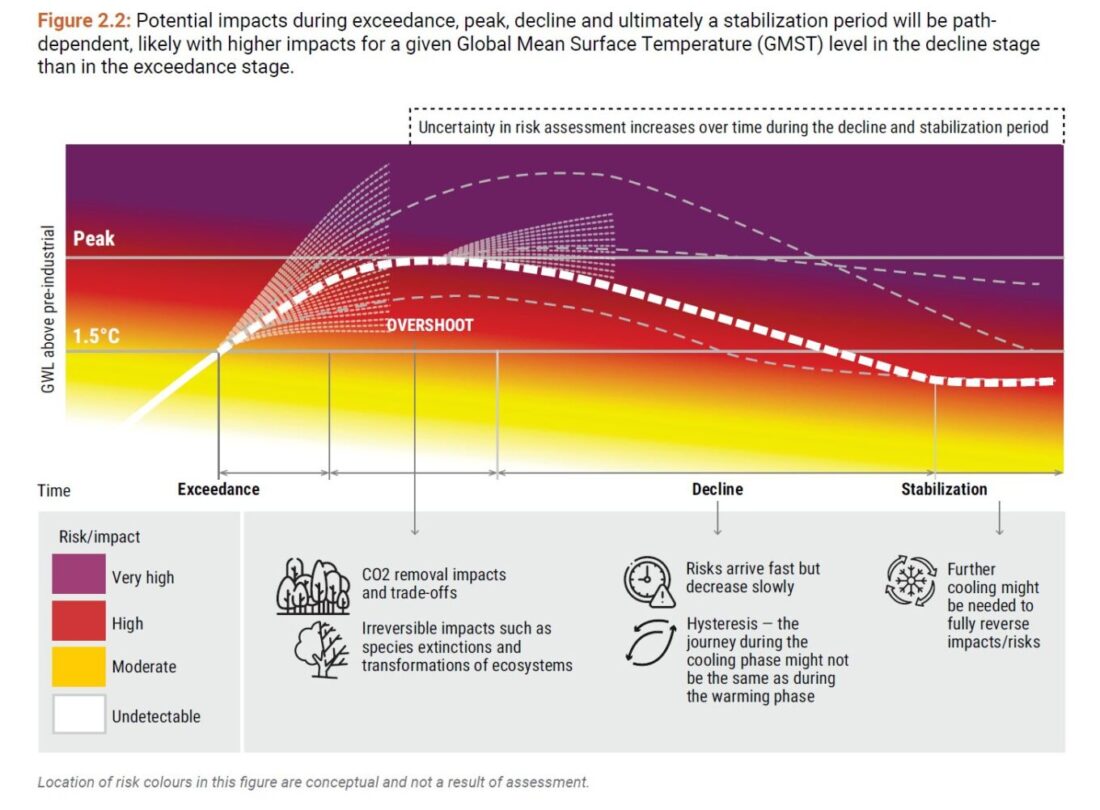
Amid a growing number of catastrophic disasters year after year, the United Nations Environment Programme (UNEP) released a report titled “Limiting Overshoot” on September 2, 2026. This report states that the global temperature rise is set to cross 1.5°C, likely within the next few years. 1.5°C is the target agreed upon by the global community in the Paris Agreement at COP21 (in 2015) to limit climate change. However, this report examines the implications of entering an “era of overshoot,” in which global temperature rise has exceeded 1.5°C, and reaching the stage where temperature rise determines the choices that remain available.
The Effects of Exceeding 1.5°C within the Next Few Years;
The Harsh Reality
“Overshoot” refers to the condition in which global temperature rise has exceeded 1.5°C.
While it is reported that the global average temperature was exceeded by 1.5°C in 2024, this UNEP report indicates that, even from a long-term perspective, the temperature is projected to exceed 1.5°C above pre-industrial levels within the next few years.
According to UNEP estimates, under current policies, median projected global warming reaches around 2.6°C by 2100 (range: 1.9–3.6°C). Even under one of UNEP’s most optimistic scenarios, which assumes the implementation of all NDCs (Nationally Determined Contributions) and long-term net-zero targets, central global warming estimates peak at around 1.8°C (range: 1.7–2.2°C). Central estimates in all cases indicate that global warming will exceed 1.5°C within the next decade.
Impacts of Overshoot (Exceeding 1.5°C)
If the temperature rise exceeds 1.5°C, the risks and impacts will intensify with every 0.1°C increase. While the timing of when these impacts become apparent may vary, the following possible risks and impacts are included:
- Intensified extreme weather, ecosystem loss, and submersion of Small Island Developing States (SIDS) and low-lying coastal cities. For warming up to/less than 3 degrees, glaciers could lose more than a quarter of their mass by 2100, raising sea levels by 12.5 cm, while damaged or fragmented ecosystems can accelerate climate change.
- Severe damage to human health, food security, water supplies, nature, cities, infrastructure and economies. For example, global food production could decline by up to 14 per cent by 2050 in the absence of effective adaptation.
- Crossing thresholds that become difficult or impossible to reverse on human timescales. Potential tipping points include irreversible changes to ice sheets, the Atlantic Meridional Overturning Circulation and the Amazon rainforest.
Once 1.5°C is exceeded, there is no safe scenario. This means that under conditions of global warming exceeding 1.5°C, everyone is highly likely to suffer harm.
Don’t Give Up on 1.5°C
UNEP emphasizes the importance of the 1.5°C target and argues that the global goal should remain limiting long-term average warming to 1.5°C. While maintaining this goal, if warming exceeds the target, we must not only step up our efforts beyond what we have done so far but also accelerate our adaptation to the impacts of climate change. In other words, rather than abandoning the 1.5°C target, the world must continue efforts to reduce emissions with that target in mind, aim for better results, and accelerate the implementation of faster mitigation and adaptation.
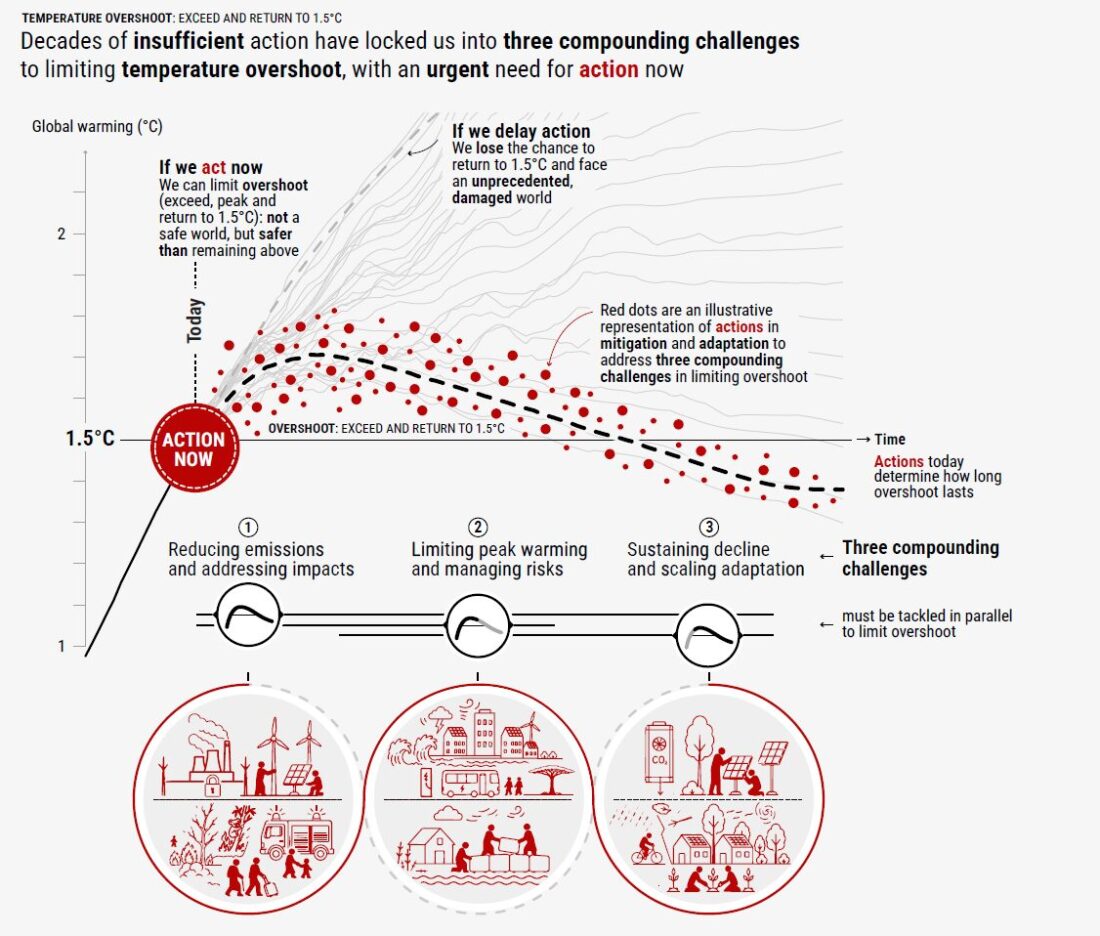
The report points out that rapid, collective, and global action is vital: lowering the peak of global warming and shortening exceedance duration will reduce risks and impacts, reduce the burden and costs of adaptation efforts on local communities, and increase the chances of bringing temperatures back down.
To increase the chances of bringing the temperature back down to 1.5°C
The United Nations and research institutes have warned that achieving the 1.5℃ target will be difficult under the current pace of GHG emission reductions. Generally, overshoot has been considered essential to avoid at all costs. However, given the current situation, discussions have intensified regarding the possibility that an overshoot may be unavoidable. This report directly addresses post-overshoot mitigation strategies, focusing on how to mitigate the impacts after exceeding 1.5°C.
In order to lower peak warming, even if only slightly, and shorten the period of overshoot, early actions to reduce GHG emissions are essential. The report also highlights the importance of equity, climate justice, and a just transition. These measures form the core of strategies to secure a liveable future for coming generations. Mitigation and adaptation are interconnected and mutually reinforced; they must be advanced together while being responsive to emerging risks. While technologies like Carbon Dioxide Removal (CDR) – the process of removing carbon from the air and storing it through afforestation or other means – will be needed as a technical measure, the report pointed out that CDR is not an alternative for sustained reductions in GHG emissions, but rather a measure that is required after emissions have been reduced. Furthermore, the report notes that these methods come with risks and trade-offs that limit their potential and require a careful governance framework to ensure their responsible and appropriate implementation.
Through Overshoot and Beyond
This report warns that it remains unclear whether global temperature rise can return to below 1.5 ℃ after it has overshot. Even if a return to below 1.5°C is secured, many nations and communities will face irreversible losses and permanently changed conditions. A comprehensive new governance framework is needed to address the impacts of climate change.
Attention is focused on how the issue of addressing climate overshoot will be discussed at the 31st Conference of the Parties to the United Nations Framework Convention on Climate Change (COP31), to be held in Antalya, Turkey, in November 2026.
[Reports]
- Press Release: UNEP: World set to cross 1.5°C global warming, but can still limit, adapt to and return from higher temperatures
- Report Download: Limiting Overshoot: Navigating exceedance of 1.5°C and pathways towards return
- UNEP Web Story (with movie)
Overshoot explained: 5 things to understand about a world beyond 1.5°C - Key Message: UNEP, LIMITING OVERSHOOT, COMMS KEY MESSAGES
[Related Information]
UNEP: Emissions Gap Report 2025
Written/Published by: United Nations Environment Programme (UNEP)
Published: September 2, 2026