
On August 11, 2026, the U.S. Energy Information Administration (EIA) released its Short-Term Energy Outlook (STEO) August 2026. According to the report, while U.S. electricity consumption continues to rise, coal-fired power generation is decreasing and renewable energy is increasing, even under the Trump administration.
Below are excerpts from the STEO regarding U.S. electricity and thermal coal.
- U.S. electricity generation has been rising to meet growing demand from data centers. On August 3, the Texas governor announced a pause on new data center development, and as a result, EIA has lowered the forecast for electricity demand in Texas.
- During the first half of 2026 (1H26), total generation by the U.S. electric power sector was up 37 billion kilowatt hours (BkWh), or 1.8%, compared with the first six months of 2025. The increase in power generation since the start of 2026 is primarily due to new solar power projects and an increase in natural gas-fired generation, and this trend is expected to continue in 2027.
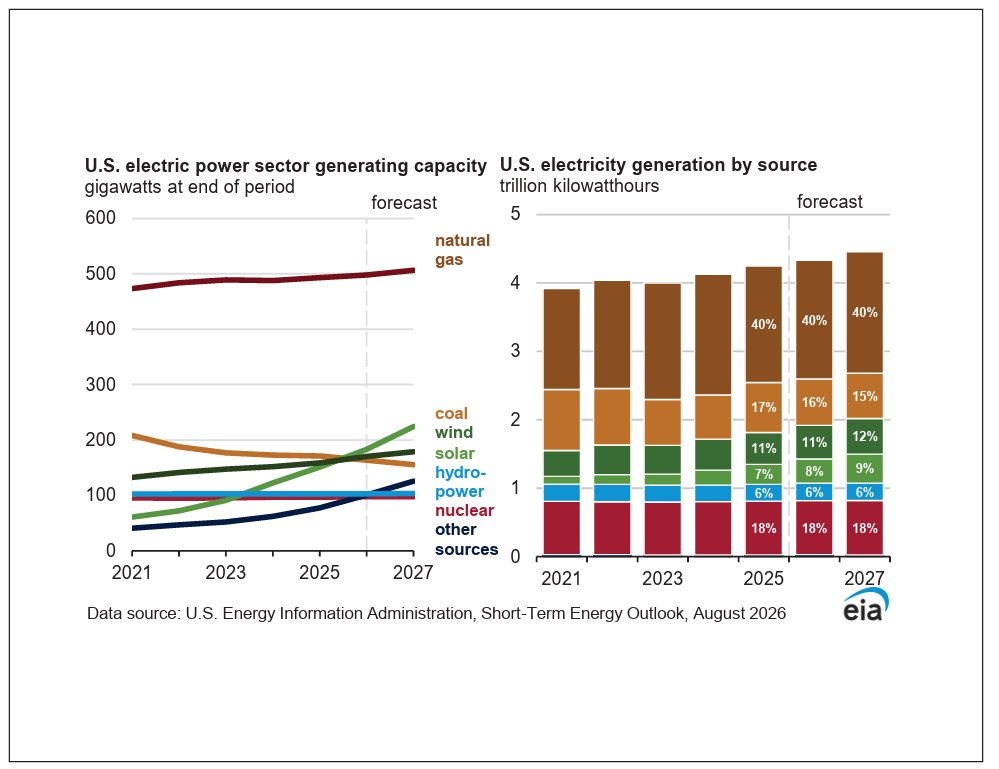
- Natural gas-fired electricity generation, which increased by 2% in 1H26, is forecast to increase in 2027 as natural gas prices remain relatively low, while coal generation continues to decline due to the shift toward lower-cost natural gas.
- With the shift to lower-cost natural gas, coal-fired generation has been declining. During 1H26, U.S. coal generation was down 39 BkWh (11%), reversing the increases that occurred in 2025. The EIA expects another year-over-year decline of 15 BkWh (4%) in 2H26. The EIA forecasts the declines in coal generation to slow somewhat in 2027, falling by 18 BkWh (3%) for the year.
- Generation from solar and wind was up 21% and 6%, respectively, in 1H26, reflecting continuing growth in renewable energy generating capacity. The EIA expects new additions of generating capacity.
- Regarding the shares of U.S. electricity generation, the EIA forecasts that, as renewable energy expands, coal-fired power will decline from 17% in 2025 to 16% in 2026 and 15% in 2027. Natural gas-fired power is expected to remain at 40% between 2025 and 2027, while nuclear power is projected to remain at 18%.
Shares of U.S. electricity generation
| 2025 | 2026 | 2027 | |
| Natural gas | 40% | 40% | 40% |
| Coal | 17% | 16% | 15% |
| Nuclear | 18% | 18% | 18% |
| Conventional hydropower | 6% | 6% | 6% |
| Wind | 11% | 11% | 12% |
| Solar | 7% | 8% | 9% |
| Other energy sources | 1% | 1% | 1% |
- Steam coal exports declined by an average of 11% year-over-year in the first three months of 2026 but then increased as global coal market dynamics favored incremental sales by U.S. coal exporters in April, May, and June. Global coal prices rose in May and remained elevated through June because of seasonal restocking, tighter supply, and uncertainty surrounding the conflict in Iran. Moreover, higher gas prices resulting from the Strait of Hormuz conflict led to natural gas-to-coal switching in Europe and Asia. Changes in weather and a rise in solar and wind curtailments in China also contributed to increased global coal utilization in the first half of 2026.
Related Information
U.S. Energy Information Administration (EIA), Short-Term Energy Outlook
Short-Term Energy Outlook August 2026 (PDF)
Written/Published by: U.S. Energy Information Administration (EIA)
Published: August 11, 2026