
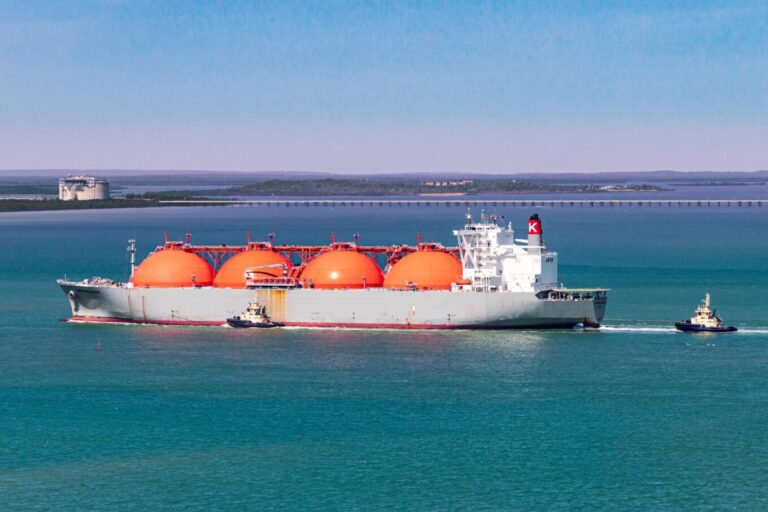
Between June 2 and 17, 2026, around 400 workers at INPEX’s Ichthys LNG plant off the northern coast of Australia went on strike. Organized by the Offshore Alliance and the Electrical Trades Union, the strike threatened to disrupt operations at one of Australia’s largest LNG plants. Producing up to 9.3 million tonnes of LNG annually, most of Ichthys’ production is exported to Asia, with its LNG accounting for approximately 10% of Japan’s imports. While already facing limited LNG supply due to the blockade of the Strait of Hormuz, the strike further highlighted Japan’s vulnerability to supply chain disruptions as shipment delays from Ichthys could have added on to the uncertainty of Japan’s energy supply.
| Ichthys LNG Project |
| Joint venture between INPEX group companies (67.82% interest), TotalEnergies (26%), and the Australian subsidiaries of CPC Corporation Taiwan (2.625%), Osaka Gas (1.2%), Kansai Electric Power (1.2%), JERA (0.735%) and Toho Gas (0.42%). Commenced production in 2018 and produces up to 9.3 million tonnes of LNG annually. One of the few projects globally to manage the entire development and production chain of subsea, offshore, pipeline and onshore operations. While around 70% of the LNG produced at Ichthys is exported to Japan, the resale of LNG from Japan to Southeast Asian countries has become an international concern. INPEX plans to expand exploration activities in the region and aims to introduce Carbon dioxide Capture and Storage (CCS) to some mining areas from around 2030. |
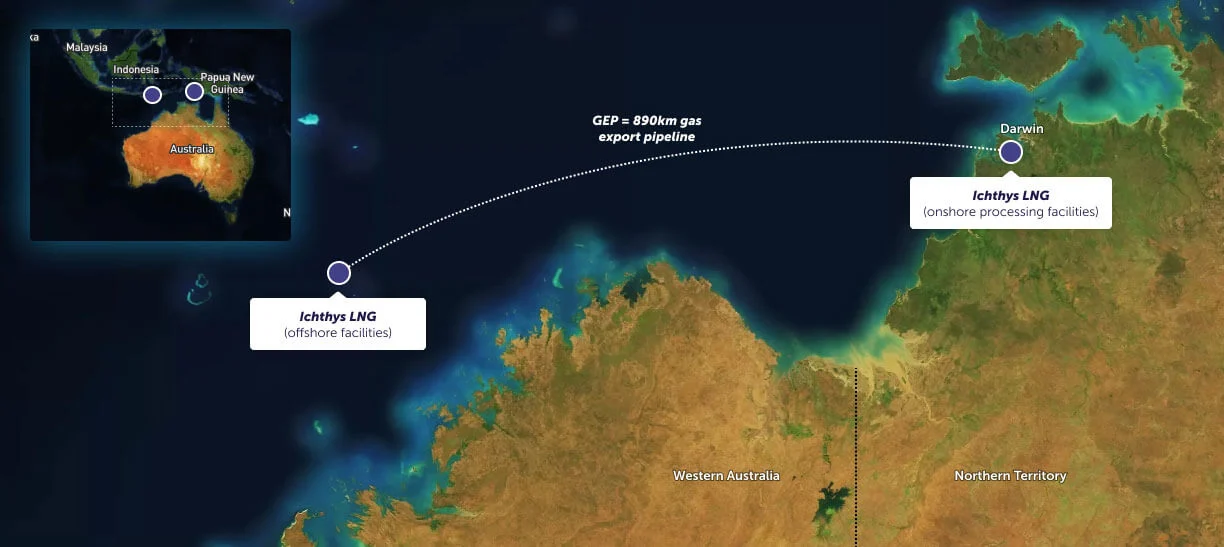
Source: INPEX, Ichthys LNG
The possibility of a strike surfaced in April after employees voted for a new employment agreement, but INPEX did not agree to workers’ demands regarding pay and job security. On May 18, the unions formally informed INPEX of the upcoming strike, while expressing willingness to return to negotiations if INPEX resumed bargaining. Instead of renegotiating with the unions, INPEX filed an application under the Australian employment law Fair Work Act 2009 seeking orders to end the strike, claiming that the delays at the plant are threatening to significantly damage the Australian economy and risk domestic blackouts. However, the Fair Work Commission (FWC) denied the application to terminate the strike, outlining the background for its dismissal in the “Reasons for Decision” document published on June 14.
In its response, the FWC estimates the value of INPEX’s LNG production in June 2026 to be between $15 million and $22 million per day. Despite this, it rejects the claim that a short-term production disruption of days or weeks at the Ichthys plant would significantly damage the broader Australian economy to the extent claimed by INPEX. This decision is likely based on Ichthys’ heavy focus on international trade, as 70% of its LNG is exported to Japan, meaning that the losses from a production disruption would primarily be borne by INPEX itself in lost export revenue, rather than by the Australian public.
On June 17, the unions announced an agreement with INPEX over the demands on working conditions, and the cessation of the strike that had been planned to last until July 6. In addition to the striking period delaying LNG shipments, Ichthys’ facilities were only days away from reaching maximum storage capacity and being forced to slow down offshore operation. This would have risked technical challenges and shutdown, which is likely why INPEX accelerated the agreement with the unions.
As the strike ended earlier than planned, it ultimately did not impose notable delays to Japan’s LNG imports. However, the risks posed by a sudden disruption to one supplier further expose the vulnerability of Japan’s fossil fuel-dependent energy supply. The Middle East crisis and blockade of the Strait of Hormuz have already prompted the Japanese government to temporarily lift restrictions on inefficient coal-fired power generation. However, as many countries are seeing recent supply chain disruptions as an opportunity to advance the expansion of renewable energy, Japan’s strategy in attempting to maintain its fossil fuel -based power generation stands out as unrealistic. Ongoing energy crises like these highlight the necessity for Japan to transition away from fossil fuels, not only to meet its decarbonization targets, but also to secure a more stable energy supply domestically.
References
Fair Work Commission, Deputy President Easton, Response to Application by Inpex (14 June 2026)
Fair Work Commission, INPEX Timor Sea Oil & Gas Project
INPEX, Ichthys LNG
INPEX, The Ichthys LNG Project and nearby exploration blocks
Related JBC articles
【News】 Energy Policy Bombarded with Middle East Situation—Return to Coal or Move Away from It?
【News】Reversing the 50% Capacity Factor Limit for Inefficient Coal-fired Power for FY2026 Goes Against Decarbonization