
On April 27, 2026, France announced its Roadmap for Transitioning away from Fossil Fuels at the First Conference on Transitioning Away from Fossil Fuels, hosted in Santa Marta, Colombia.
Although the plan reinforces previously set goals, it stands out in its details for implementing France’s existing fossil fuel phase-out plans and sets an example for other countries with similar climate commitments that are yet to release practical proposals for a gradual phase-out.
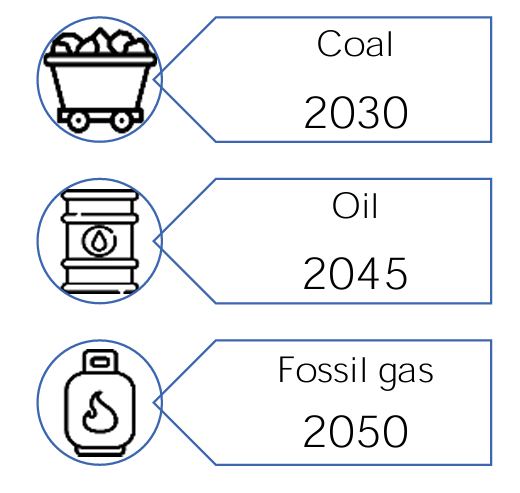
The National Low Carbon Strategy (SNBC) specifically explains France’s intended roadmap to phase-out fossil fuels by 2050, with interim targets of retiring coal by 2030, oil by 2045, and fossil gas by 2050.
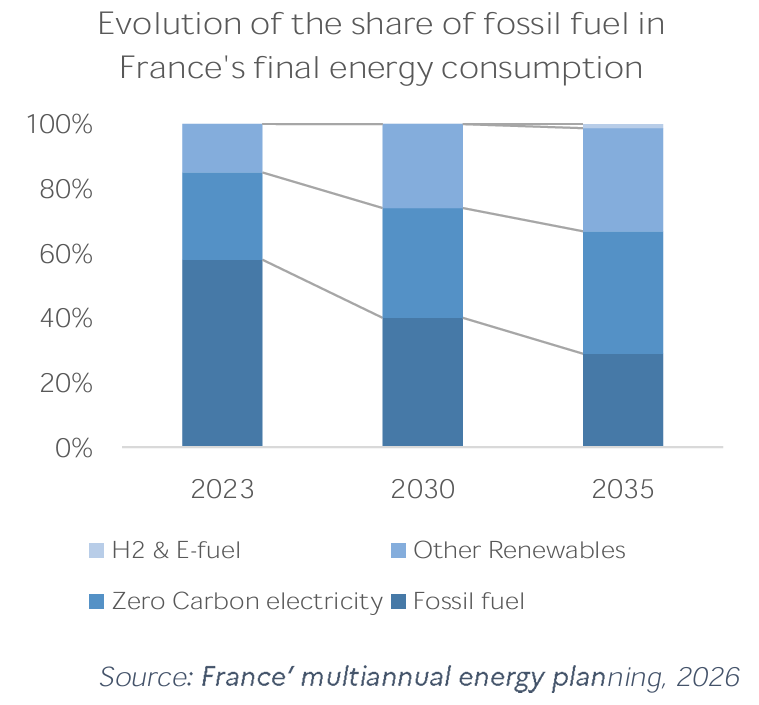
Currently, France is highly reliant on fossil fuel imports, which account for almost 60% of its final energy consumption. To address this dependency, the SNBC sets specific steps for the most fossil fuel-reliant sectors of transport, buildings, industry and small-scale manufacturing.
While the closure of the remaining two coal-fired power plants is scheduled for 2027 to achieve a coal phase-out by 2030, oil and gas contribute to a more significant portion of France’s energy consumption (38% and 19%, respectively) and require more holistic approaches to achieve the phase-out. Therefore, the strategy includes both restrictions to current power generation methods, as well as incentives for transitioning to renewable alternatives.
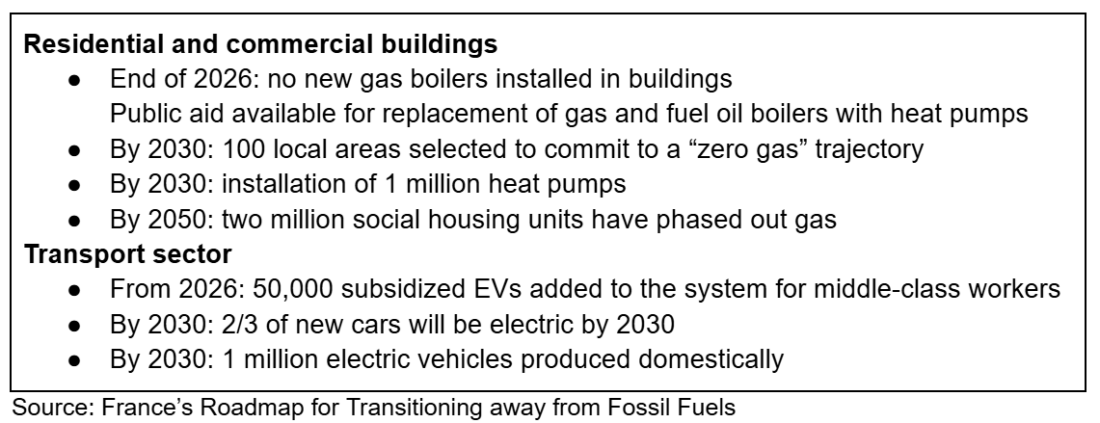
As 66% of oil in France is used in the transport sector, targets such as two thirds of new cars sold being electric by 2030 and ending the sales of thermal passenger vehicles by 2040 are shifting the trend toward public transportation and domestic EV production.
Moreover, the Roadmap details how France aims to gradually phase out fossil fuels within residential heating, beginning with a ban on gas boilers in new buildings by the end of 2026, while also providing financial support for households replacing their gas and fuel oil boilers with heat pumps. This should lead to an estimated 1 million heat pumps installed per year by 2030.
Measures and targets for accelerating reduction of dependence on fossil fuels
Along with decreasing fossil fuel use through energy efficiency improvements in buildings and development of charging station infrastructure for the large-scale electrification of transport, the Multiannual Energy Planning (PPE), which serves as a roadmap similar to the SNBC, sets targets for expanding domestic renewable energy production. This includes impressive targets of increasing installed capacity of solar by threefold, hydropower by 2.8 GW and offshore windpower by 15 GW by 2035. The umbrella term of decarbonized energy production also includes nuclear power, hydrogen and biomethane, all which France is planning to use to accelerate the phase-out of fossil fuels.
The SNBC aims for a 50% reduction in greenhouse gas (GHG) emissions by 2030 when compared to 1990 levels, which is notably more ambitious than Japan’s 2030 goal of a 46% reduction from the relatively recent 2013 levels. Still, the overall targets leave France behind the EU’s climate leaders that have set goals and have begun implementing them more urgently.
The Roadmap has strengths in improving accountability for France to follow through with its climate promises, and also in setting a standard for other countries to provide details on how they expect to achieve their phase-out targets.
France’s leadership shows that merely setting targets is not enough, and that clarifying concrete steps to achieve them is necessary. Such a redesign of a fossil fuel phase-out roadmap is also urgently needed in Japan.