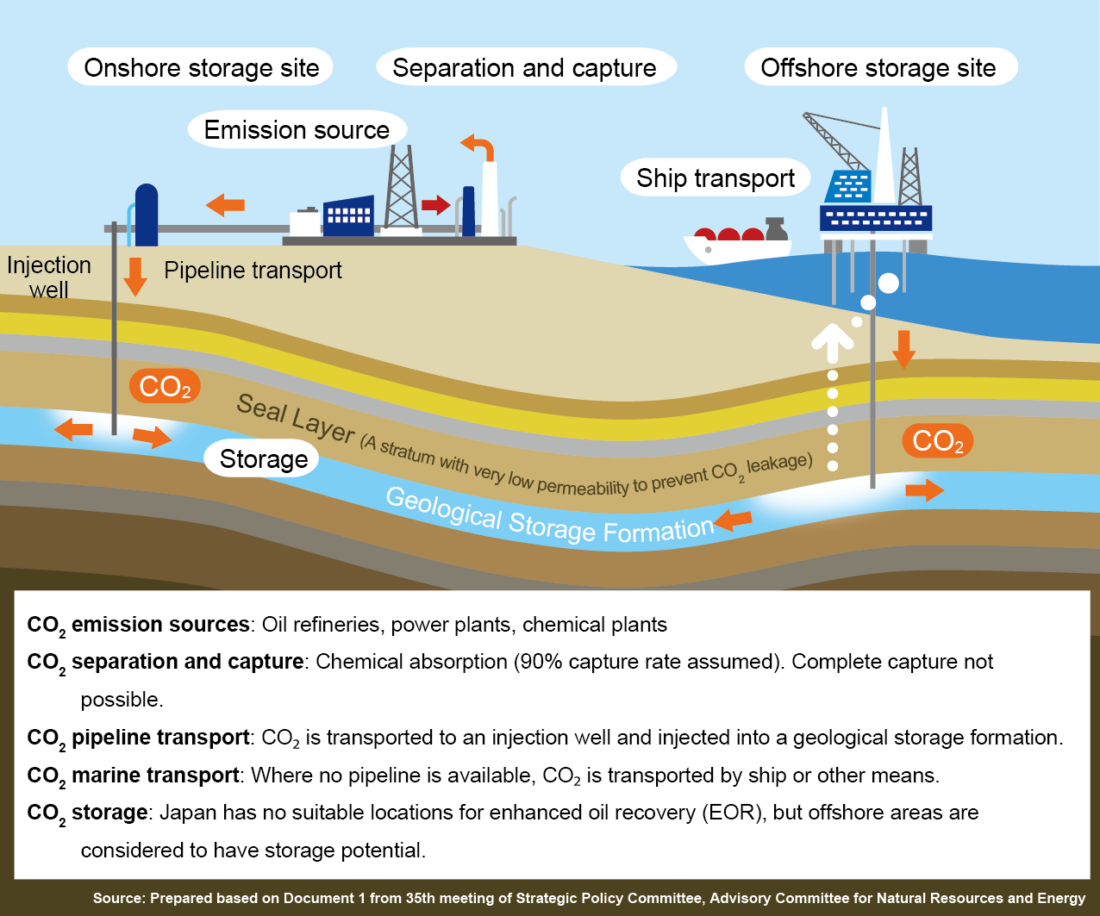
Carbon capture and storage is a technology that captures carbon dioxide (CO₂) emitted from burning fossil fuels and injects it into geological formations underground or beneath the seabed for storage. As part of its plans for a future “decarbonized society,” the Japanese government aims to put CCS into practical use by 2030. In doing so, it intends to continue using coal-fired power well into the future and spend vast sums on CCS-related projects.
CCS and the 1.5°C goal
It is often argued that limiting the increase in global temperatures to below 1.5°C above pre-industrial levels will be difficult using existing technologies alone and will require technological innovation, including CCS. However, the contribution of Working Group III to the Intergovernmental Panel on Climate Change’s Sixth Assessment Report (IPCC, AR6) states that CCS may be one option where geological storage is available, while also noting that CCS is not yet mature in the power sector or in industries such as cement and chemicals.
Separating and capturing CO₂ is technically difficult, requires large amounts of energy, and cannot achieve a 100% capture rate. Every stage of the process also consumes energy. CO₂ must be transported by pipeline or other means. A suitable storage formation must be identified, hundreds of meters to several kilometers underground. Injection wells must be drilled and the CO₂ injected into the formation. Thorough risk assessment and verification are also essential. Once injection has taken place, the storage site may need to be monitored for thousands of years.
Most CCS facilities currently operating outside of Japan use enhanced oil recovery (EOR), in which captured CO₂ is injected into oil fields to increase oil production. Much of today’s CCS industry is therefore built around increased oil extraction.
CCS worldwide: High costs derail projects
As of 2022, only one coal-fired power plant equipped with CCS is operating: a Canadian facility that uses enhanced oil recovery (EOR). A CCS project also operated at a coal-fired power plant in the United States, but it was suspended in 2020 for economic reasons.
According to a survey of 32 cases of canceled overseas CCS projects, 61% of them cited economic viability issues as the reason. In Europe, CCS has made little progress in thermal power generation because it is not cost-competitive with renewable energy.
CCS in Japan: Still far from practical deployment
Japan has no thermal power plant equipped with CCS, including any currently under construction. CO₂ storage demonstration projects have been conducted at two locations: Nagaoka in Niigata Prefecture and Tomakomai in Hokkaido. In Nagaoka, approximately 10,000 tonnes of CO₂ were injected underground between 2003 and 2005. In Tomakomai, approximately 300,000 tonnes were injected beneath the seabed between 2016 and 2019. A site off the coast of Fukushima Prefecture was also investigated as a possible location. However, the project was discontinued after the Great East Japan Earthquake in 2011. The study location was near the epicenter. Japan is surrounded by active faults and highly exposed to earthquakes, making geological storage inherently risky. No next candidate site has yet been identified.
Unrealistic assumptions about storage potential
Plans to store 120–240 million tonnes of CO₂ every year
A Ministry of Economy, Trade and Industry study group on a long-term CCS roadmap has estimated that annual CCS storage in 2050 should reach approximately 120–240 million tonnes. To achieve this, Japan would need to add 12 to 24 injection wells every year between 2030 and 2050, each capable of injecting 500,000 tonnes of CO₂ annually. The study group has also estimated that 11 locations in waters surrounding Japan could provide storage capacity of approximately 16 billion tonnes.
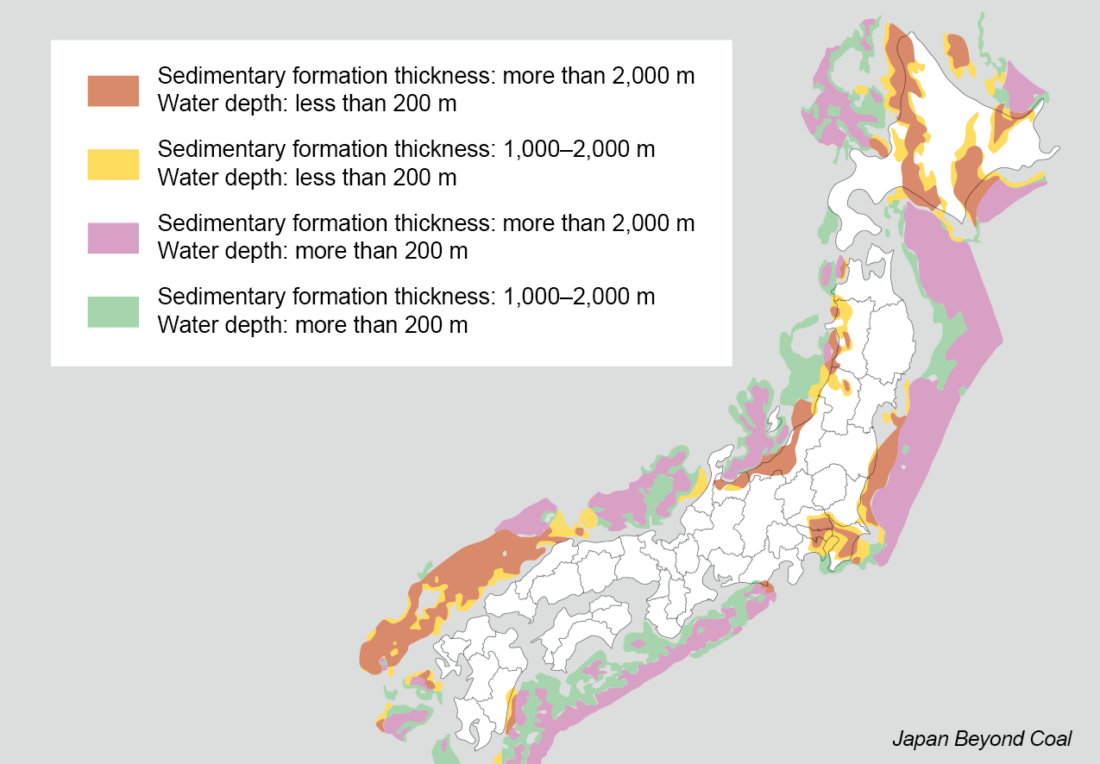
However, Japan has so far injected only 300,000 tonnes over a three-year trial project and has not even identified its next candidate site. Given this record, these highly optimistic assumptions are far removed from what has been achieved to date. Continuing to operate unabated thermal power plants for decades on the basis of such assumptions would delay the emissions reductions needed to address climate change.
Figure Source: Prepared based on the interim report of the Study Group on the Long-term CCS Roadmap
Far more expensive than renewables
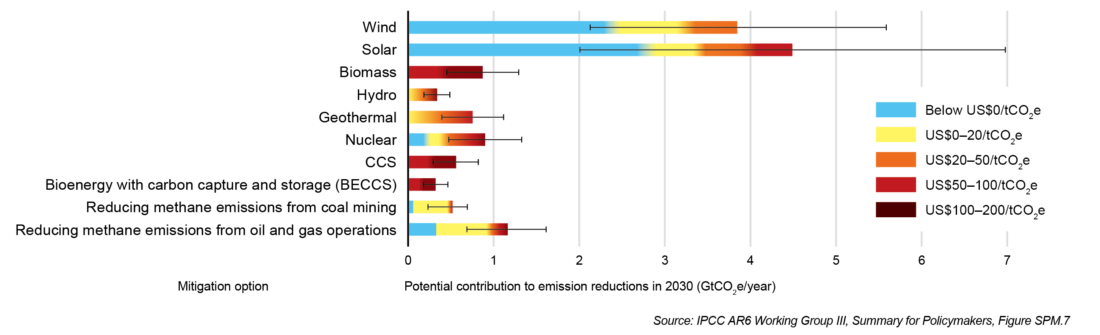
According to the IPCC, wind and solar offer overwhelmingly greater emissions-reduction potential in 2030. Their costs can also be as low as US$0 per tonne of CO₂-equivalent. By contrast, the emissions-reduction potential of CCS is limited, while its cost is high, at US$50–200 per tonne of CO₂. Japan has no suitable oil fields where CO₂ storage could be combined with enhanced oil recovery. Storage would therefore need to take place beneath the seabed, where earthquake risks would add to the challenges and costs. These factors are likely to make CCS even more expensive in Japan.
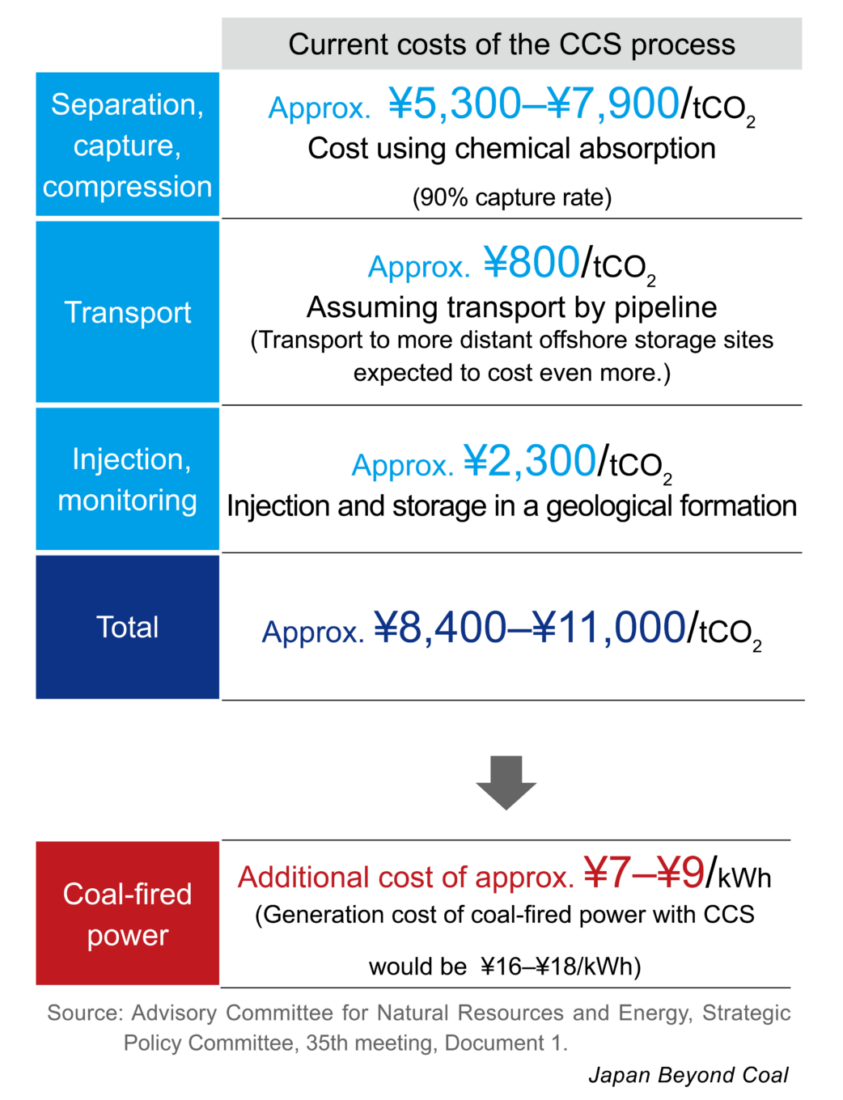
The government previously set a target of reducing CCS costs to 2,000 yen per tonne by 2020. Actual costs, however, remain far above that target, at approximately ¥8,400–¥11,000 per tonne. As renewable-energy costs continue to fall, thermal power equipped with CCS is unlikely ever to become competitive. Pursuing CCS in the power sector would impose wider costs on society and lead to higher electricity prices.
CCS is no answer to the climate crisis—and risks becoming a costly dead end
Accelerating action before 2030 is essential if the world is to address the climate crisis. A policy that does not envisage practical deployment of CCS until 2030 is therefore little more than a delay in taking effective action. Even if CCS is successfully deployed, capturing 100% of emissions is impossible. When the energy consumed by the capture, transport and storage process is taken into account, CCS-equipped power generation cannot be considered zero-emission.
Businesses promoting CCS have argued that strong government support is necessary, including a regulatory framework and public subsidies during both the construction and operating stages. The government has been considering such measures. The budget for the Ministry of Economy, Trade and Industry’s CCUS research, development and demonstration programmes alone increased from ¥6.03 billion in FY2021 to ¥8.23 billion in FY2022. The FY2023 budget request rose further to ¥10.83 billion. There is therefore serious concern that promoting extremely costly CCS will not only prolong the life of existing coal-fired power plants but will ultimately result in wasted investment.
Published September 2022
The original Japanese version is in PDF.