On December 21, 2025, the Ministry of Economy, Trade and Industry (METI) and Chiba Prefecture hosted the “Kujukuri Offshore CCS Policy Seminar” at the Kujukuri Town Central Community Center. Although this event was intended to “deepen understanding” of the national carbon dioxide capture and storage (CCS) project, there was simply too little time and information to address residents’ questions and concerns.
During the seminar, the presenters repeatedly explained that CCS is a “key option” to achieve carbon neutrality, and the currently planned project at Kujukuri offshore is exploratory drilling to investigate the possibility of future CCS. Since it is only to check the underground structure, presenters repeated the phrases “the plan (CCS project) has not been decided yet” and “ this is merely the investigation stage” multiple times.
However, the residents gathered at the community center weren’t interested in such general remarks. The presenters talked at length but hardly explained about what exactly would be built in the Kujukuri area and how the project would proceed. During the Q&A session, with only 20 minutes remaining, residents raised their hands one after another to ask questions: about the specific pipeline route in the Metropolitan Area CCS Project; the location of the recompression facilities; the safety of underground CO2 storage in the earthquake-prone area; CO2 leakage accidents that had happened overseas, and the costs of monitoring and surveillance systems that will extend to future generations.
Among those questions, the biggest concern was the absence of an environmental impact assessment (EIA) in the plan. Residents questioned “Why this (CCS) project is not subject to an EIA while it has significant environmental impacts?” and/or “Is it acceptable to proceed without conducting an EIA?”
The reply from METI was that CCS projects are not subject to the current EIA Law and there is no legal obligation to conduct EIA. Furthermore, while METI mentioned that similar questions arose at the last year’s Diet deliberations, it also stated “The Ministry of the Environment is in a position to continuously review whether CCS projects should be subject to regulation in the future, while assessing how CCS projects would be developed.” Such statements sound like an attempt to shift the responsibility for CCS projects not being subject to EIA onto the Ministry of the Environment, despite the METI leading the discussions on the CCS Act.
Fundamentally, EIA is a system designed to predict and evaluate any effects of projects on the surrounding environment before implementation, and allow for revisions of plans based on residents’ opinions. However, at the Kujukuri seminar, METI only stated that CCS projects are “exempt” from the EIA without offering a clear explanation of how an alternative environmental verification mechanism would be adequately implemented.
Residents also had dissatisfaction and distrust by the absence of the private-sector project operator at the seminar. The issue at CO2 capture site (Nippon Steel), issue for the pipeline construction (Metropolitan CCS: a joint venture between INPEX and Kanto Natural Gas Development), and issue at CO2 storage site: all issues are fragmented. Moreover, since no one takes responsibility for the overall vision of this Metropolitan Area CCS Project and everything is proceeding in a disjointed manner, it is difficult for residents to grasp the full picture even if they attend the explanatory meetings for their respective areas.
After some questions and answers, many attendants were still trying to ask questions, but the seminar was cut off at the scheduled 4:00 PM end time.
“We are only doing an investigation at this point.” “Nothing has been decided yet.”
As these words are repeated, the investigation will proceed. EIA is deemed “not applicable” and crucial discussions are postponed “for later consideration.” In such condition, at what stage will residents be able to get a full scope of the project and voice their opinions? And will they be given any options?
The lack of transparency and democratic decision-making process, including the exclusion of environmental impact assessments, is a serious problem even before considering the merits of CCS. The purpose of the seminar, “deepen understanding,” should not mean providing selectively curated information and explaining whether the EIA applies or not. Rather, it should involve answering all questions until all residents are satisfied, keeping records, and ensuring verifiability.
This time it was held as a “Policy Seminar,” but opportunities to communicate with residents in depth, such as “explanatory sessions” for the entire project, are what are really essential.
“Kujukuri Offshore CCS Policy Seminar” information
Date: December 21, 2025 14:00-16:00
Location: Kujukuri Town Central Community Center
Agenda and information material(agenda): only available in Japanese
- 千葉県の地球温暖化対策の取り組み 千葉県商工労働部(資料)
- CCS政策の動向について 資源エネルギー庁燃料環境適合利用推進課(資料)
- 苫小牧におけるCCUS大規模実証試験について 日本CCS調査株式会社(資料)
- CO2貯留の仕組みと地層評価 JOGMEC エネルギー事業本部 CCS事業部 CCS技術課(資料)
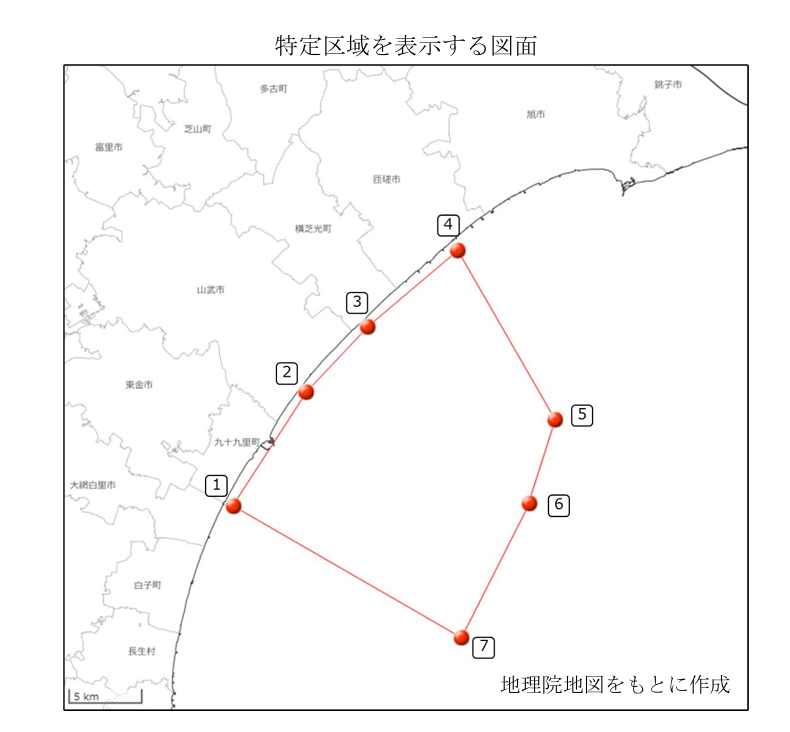
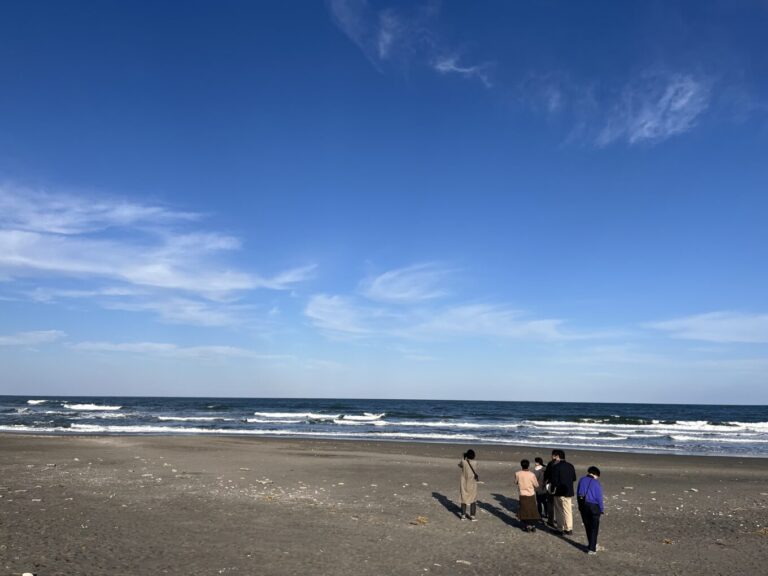
Photo: Kujukuri beach
Related article
【News】Tunnel planned to transport CO2 for Tokyo area CCS project