
The summer of 2025 (June to August) was hotter than the previous year. According to the Japan Meteorological Agency, the national average temperature deviation from normal was +2.36°C and recorded the highest temperature in observed history. Media coverage features more frequently words like “global warming” and/or “climate change,” suggesting a shift in Japanese public awareness about climate change. However, public awareness survey
indicates that over half of respondents remain unaware of the Intergovernmental Panel on Climate Change (IPCC) reports, which present scientific findings on climate change. This article introduces three surveys related to climate change awareness.
Climate Change Awareness Survey
iGRID Solutions Inc., which supports corporate and regional decarbonization through digital technology, conducted a market survey titled “Climate Change Awareness Survey” targeting 1,000 men and women nationwide. This survey revealed that nearly 90% of respondents feel summer is getting longer, but less than half are personally taking action to combat global warming.
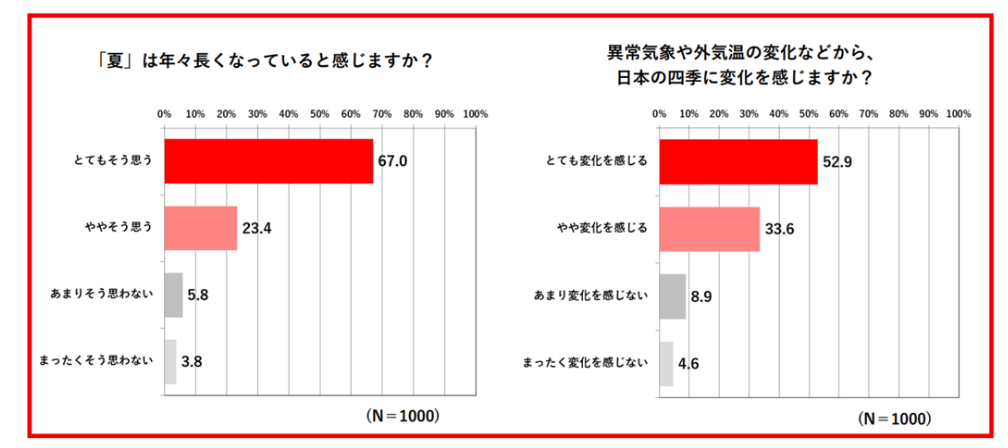
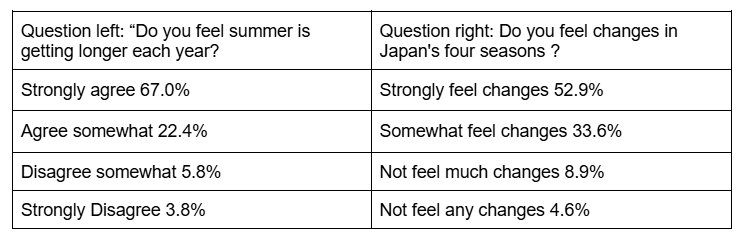
In response to the question, “Do you feel summer is getting longer each year?”, 90.4% responded ‘Yes’ (combining “Strongly agree” and “Somewhat agree”). 86.5% (combining “Strongly feel a change” and “Somewhat feel a change”) said “Yes” to the question, “Do you feel changes in Japan’s four seasons ?”. These results show that many people recognize changes occurring not only in summer but across all four seasons. Furthermore, when asked, “Do you think extreme heat and abnormal weather will continue in the future?”, 94.1% responded affirmatively, indicating that many people believe phenomena similar to this summer will persist.
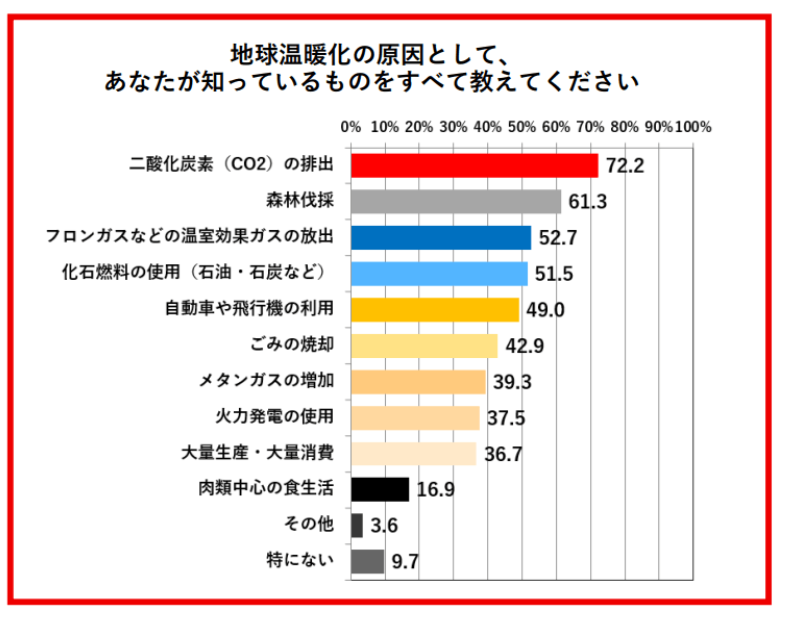
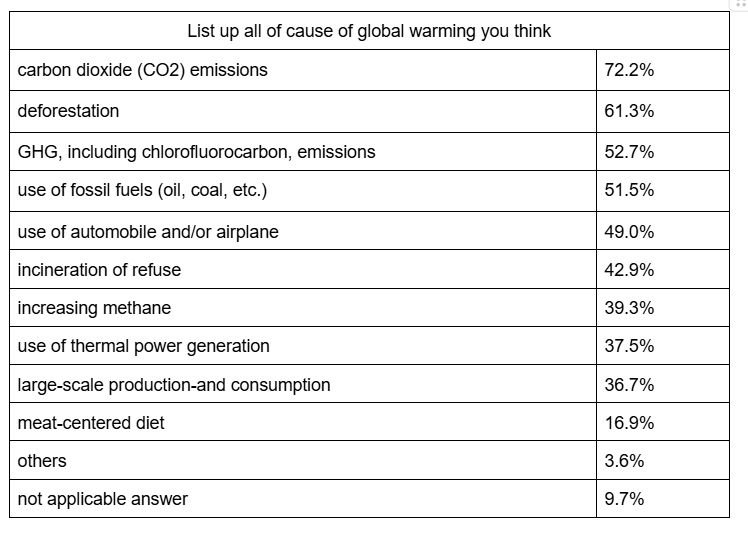
There is an interesting response: totally 81.2 % of respondents answered “I know” and “I can think of something” to the question which asked “the causes of extreme heat and abnormal weather,” indicating those people are aware that the cause lies somewhere. Regarding the question about the specific causes of global warming, “carbon dioxide (CO2) emissions” was the highest at 72.2%. Other responses included “use of fossil fuels (oil, coal, etc.)” at 51.5% and “use of thermal power generation” at 37.5%. These responses suggest that scientifically grounded information has penetrated to a certain degree.
Regarding questions about “awareness of global warming,” however, while 95.7% of respondents answered they “know” or “have heard of” the term “global warming,” only 56% indicated they ‘know’ or “have heard of” the shocking term “global boiling” expressed by UN Secretary-General António Guterres. This reveals that awareness of the UN’s warning remains low
Survey on Attitudes Toward Contemporary Japanese Society and Life
The second survey is the “Survey on Attitudes Toward Contemporary Japanese Society and Life” conducted by NHK Broadcasting Culture Research Institute, published in 2024 (the document is available only in Japanese). This survey period was from October 29 to December 10, 2024, and analyzed responses from 2,000 people aged 18 and over nationwide.
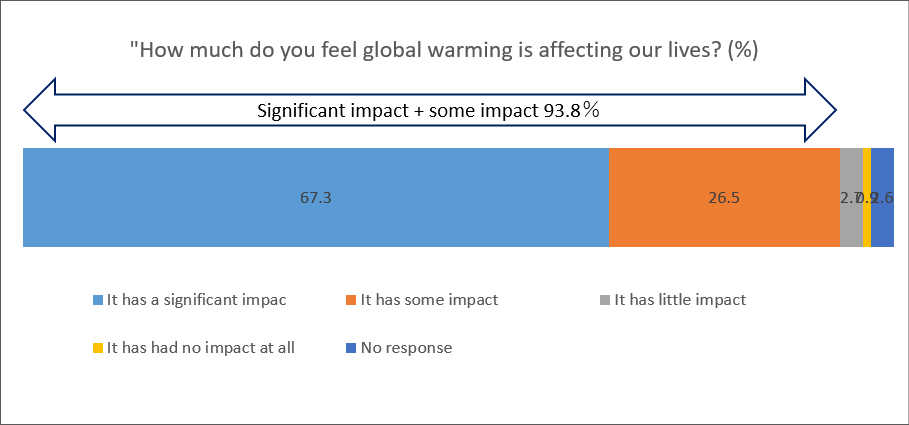
Among the environmental questions, under the questions regarding “Impact of Global Warming on Daily Life,”respondents were asked, “How much do you feel global warming is affecting our lives?” 67% answered “It has a significant impact,” and 27% answered “It has some impact.” Together, these responses suggest that approximately 94% believe global warming is affecting daily life.
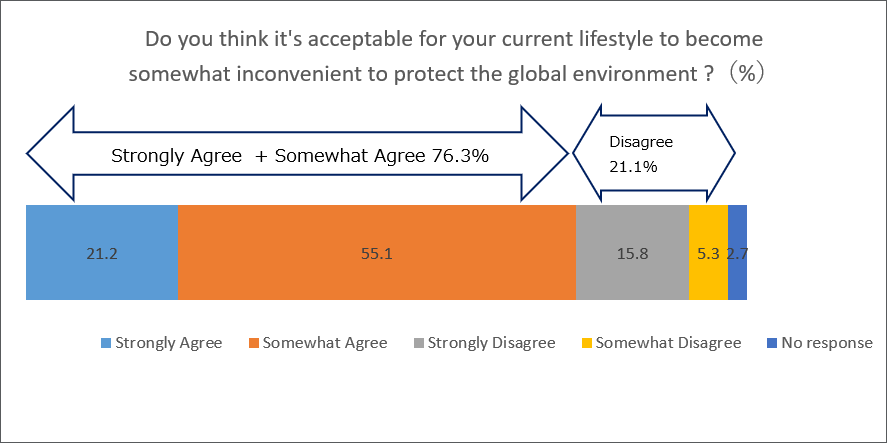
As for the next question, “Do you think it’s acceptable for your current lifestyle to become somewhat inconvenient to protect the global environment ?”, the combined responses of “Strongly Agree” and “Somewhat Agree” totaled approximately 76%, significantly exceeding the combined 21% of “Disagree” and “Somewhat Disagree”. This suggests that the sense of urgency that we must change the status quo to address global warming is not as high as awareness of global warming itself. This result shows that some people feel burdened by the idea of changing their lifestyles.
Public Opinion Survey on Climate Change (Preliminary Report)
On October 31, the Cabinet Office released the results of its “Public Opinion Survey on Climate Change (Preliminary Report).” This survey was conducted from September to mid-October 2025, targeting 3,000 Japanese nationals aged 18 over nationwide, requesting responses by mail or online.
The result of this survey, as well as other surveys, revealed a significant gap emerged between those who “care” about issues caused by climate change (91.7%) and those who “don’t care” (7.8%). The most common reason for people to feel the effects of climate change is “summer heat,” followed by “the intensity of rainfall patterns” and “the increase and intensification of weather-related disasters such as floods.” This also suggests that actual experiences are heightening awareness of climate change.
However, when asked about awareness of the Intergovernmental Panel on Climate Change (IPCC) conclusion that “human activities have caused global warming,” 64.4% responded “I don’t know,” significantly exceeding the 34.8% who answered “I know.” The IPCC report, which clearly stated that human activities are the cause of global warming, is indispensable when discussing the scientific basis for climate change countermeasures. Yet, this survey revealed the reality that only about 30% of respondents were aware of this scientific report.
When asked about willingness to engage in initiatives toward a decarbonized society, 89.2% responded that they would like to participate “actively” or “to some extent.” On the other hand, 9.7% stated they “do not want to participate.” Reasons for this reluctance (multiple answers allowed), “I don’t know if it will be effective” was cited by 56.4%. Regarding the term “climate change adaptation”—efforts to prevent or mitigate natural disasters such as heatwaves and floods caused by climate change—51.6% stated they “did not know” the term, exceeding the 11.6% who stated they “knew” it.
This preliminary report was released at the end of October 2025, and the final figures will be announced at a later date.
Apart from these three surveys introduced here, various awareness surveys and studies on social behavior have been conducted, including questionnaires on the impact of climate change (heat) on consumer behavior, heightened health consciousness due to extreme heat, and changes in behavior. All these surveys reveal that the prolonged heatwaves and frequent natural disasters in recent years have effects on people’s awareness regarding global warming.
On the other hand, these surveys have presented that awareness of the fact that “human activity is the main cause of global warming” as stated in the IPCC report, remains low. The concept of “mitigation” has not taken root, and consequently, many people remain unsure of what actions should be taken, preventing awareness from translating into concrete action. It is also true that some people are aware of the issue but are reluctant to change their lifestyles, feeling burdened by taking any actions.
The number of people having awareness of global warming and feeling the need to do something is steadily growing. Several environmental organizations (NGOs) have published guides and other resources on what citizens can do to address climate change. If you wish to learn about the current situation and begin taking action, this information will serve as a good reference.
Reference (all written in Japanese)
Kiko Network:Action Guide 【小冊子】気候アクションガイド
Green Peace Japan : Stop the climate crisis! Action Guide #01 気候危機を止めよう!アクションガイド#01
United Nations Information Center (UNIC): Act Now 個人でできる10の行動